
What’s it like to be a teacher? An Interview with Ph.D. candidate Emily Lu
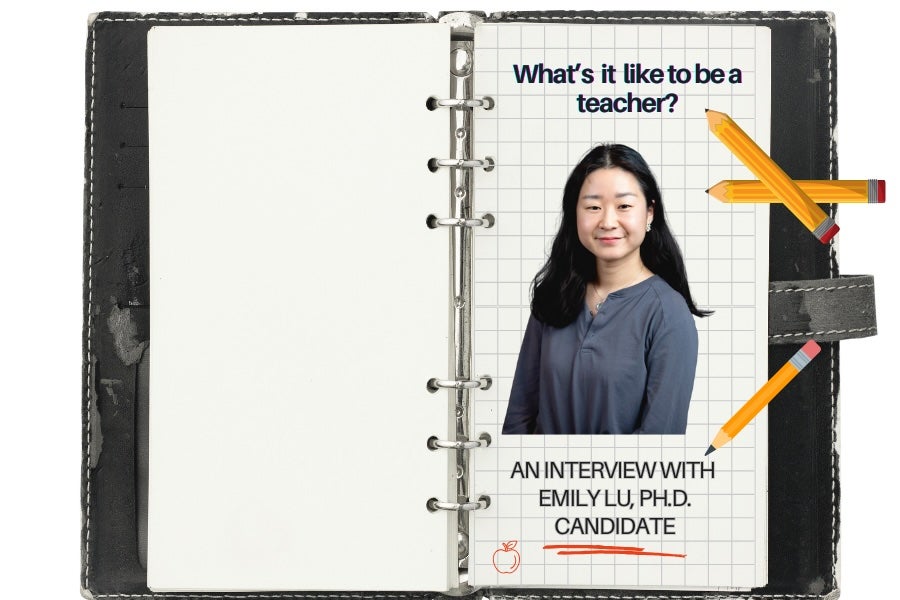
I was not a History major in undergraduate. I have a B.F.A. (Bachelor of Fine Arts) in dramatic writing. I did take history classes — they were eye-opening! I learned about Korean and Chinese history, and my history teachers challenged me to think about the world in a historical sense. It was by chance that I discovered historical music, especially from the World War II era. I took some classes in the College of Music, and I combined the insights I gained from them with my history classes and formulated my current research topic, Japanese military music during World War II.
I have taught three different courses so far. At FSU, I taught Japanese history and World History to 1815. I was also an adjunct professor for a class on East Asian Civilizations at UMass Boston. I taught that class via Zoom. The classes had between 30 and 50 students in them.
What does it feel like to teach?
I think for me, it is both very performative and interactive. I prefer in-person teaching. I get to use the space that I have in front of the classroom as a stage. I move around the classroom a lot. I like delivering a lecture in the traditional college style, but that delivery also requires the active participation of the students.
Zoom classes are much harder to conduct. You see little black boxes on your screen. You can’t see the students’ body language; you don’t get feedback in real time. And there are always technical problems. I think in-person teaching is more engaging. It allows for a more interactive classroom experience.
What is your goal as a teacher?
I teach students not just content, but I also help them with finding and articulating questions. And where to find resources to help answer the questions. I am guiding them on how to ask questions, so that they can find the answers to them by themselves.
How do you know that a class was a success?
I think a class was successful when I am feeling a sort of energy from the students, when it is a lively classroom, where the students are looking at me rather than at the electronic devices on their desks. I know I have their attention when I am asking questions, and they are raising their hands and offering answers. That is what I would consider to be a success. You know that you have struck a chord with them and you have stimulated them. That to me is a successful class.
What have you learned from your students?
I often tell my students that we are learning from each other, they are learning from me but at the same time, I am learning from them. The most important thing I am learning from my students is about the different ways that they learn – which then makes me reflect on how I learn things. Some of my students learn better when we discuss things in class, so that they can interact with their peers. Some of the students learn better when they have a face-to-face conversation with me. Some learn better through the research assignments when they can delve into a topic on their own.
Finding out about the different learning strategies helps me to improve my class, so that I can address the needs of the students better. And then I think – how can these different learning methods help me. As both an instructor and a researcher, we are teaching and learning new material at the same time.
And, of course, the students also make brilliant points in class, they ask questions that I had never considered before. I learn from them that way too.
What has teaching taught you about yourself?
It has made me see both my flaws and merits. Depending on the class, I have to evaluate my own depth of knowledge on a topic. That can be very humbling when I have to fill in gaps in my own understanding. When I am more familiar with a topic, I think I feel more confident about guiding in-depth discussions with my students. The experience of teaching has shown me where and how I need to gather more information, and it has also confirmed my command of areas which makes me feel more confident.
Was there a particular teacher in undergrad who inspired you – how and why?
There were three professors in undergrad who really changed my life, my career. What they had in common was that they were able to make me rethink the world. One of my professors used music in class. This was a modern Korean history class, and we learned about the Japanese colonization of Korea. And the professor played a well-known Korean folk song that summed up the melancholia that people were feeling at the time regarding the loss of their homeland and the fact that their sons, brothers, husbands, and fathers were going off to war with no promise of coming back. The song is called Arirang. It is considered an unofficial national anthem of the Korean peninsula. The professor was showing a documentary in class which used this song and in the discussion session we talked about this song. This made us students look at history not from a statistical and quantifying way, how many people were killed, how much political change was there, but we began to humanize the past and experience the way that people from the ground up were experiencing war, emotionally and sentimentally. That was something that stuck with me. And I think that also played a part in my own development as a history of music.
What advice would you give to other doctoral students about to start teaching?
I would say establish a good rapport with your students. Respect them as people who have entrusted their time and tuition money to learning from you. See your job not only as delivering content but also as helping students to learn to think, to discover what kind of thinker they are.
Also, don’t make assumptions about what commonly held knowledge is, what you expect the students to know. Always remember that you have been immersed in history for several years but that your students have not – and might not be History majors at all. When I taught the French Revolution, I took knowledge of the term "Third Estate" for granted. It turned out only one third of my class had heard about it, and I had not considered that I would have to explain that concept. As instructors we have to be flexible, students might not know what we consider to be foundational knowledge or they might give an answer that is completely incorrect, but we must not be judgmental about that.
Final thoughts?
Yes, I think teaching is not a one-person job. If you can, reach out to your peers or colleagues and get feedback. Have them come to do teaching observations. Additionally, make use of the expertise of other members of the department. Ask about resources, recommendations, foundational terms for areas of history that you are less familiar with. Others can help you refine and perfect your syllabus and teaching material.